
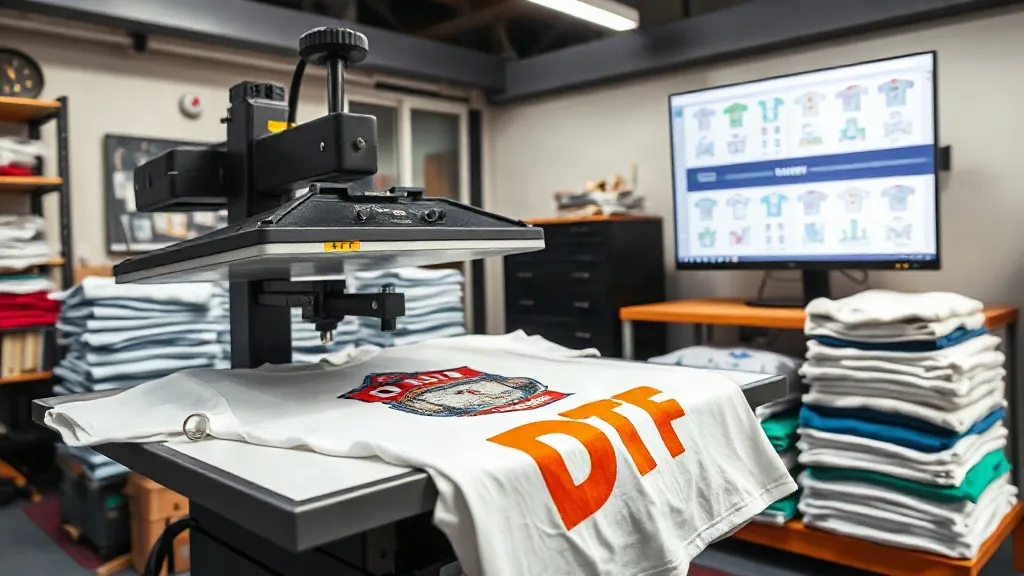
When you run a print shop, every dollar counts. You want to grow your custom apparel business without watching your margins shrink. That's where dtf transfers come in. Unlike traditional screen printing or vinyl, DTF (Direct to Film) lets you print full-color designs on a wide range of fabrics with minimal setup. But the real magic happens when you learn how to scale smartly. In this guide, I'll share practical strategies to use DTF transfers to cut costs, streamline your workflow, and keep your customers coming back.
Why DTF Transfers Are a Game-Changer for Scaling
If you've been in the apparel decoration game for a while, you know the pain of screen printing setup fees and minimums. Vinyl is fine for simple one-color designs, but complex artwork? Forget it. DTF changes the equation. With dtf transfers, you can print detailed, multi-color designs without any setup costs. That means you can take on small orders, one-offs, and sample requests without losing money. Plus, DTF works on cotton, polyester, blends, and even tough fabrics like canvas and nylon. This versatility opens up new markets, from sports teams to corporate events.
Understanding the Cost Structure of DTF Transfers
To scale profitably, you need to know your numbers. DTF transfers are priced per square inch or per sheet, and the cost per print drops as you order more. But it's not just about the transfer cost. Consider your press time, labor, and materials. DTF transfers come pre-printed, so you skip the weeding and masking steps of vinyl. That saves labor hours, which you can reinvest in taking more orders. Also, DTF transfers are durable and stretchable, reducing returns and reprints. When you factor in the total cost of production, DTF often beats screen printing for runs under 50 pieces.
Calculating Your True Cost Per Shirt
Let's break it down. Suppose you order a gang sheet with multiple designs. The cost per transfer might be $2 for a medium-sized print. Add the blank shirt (say $5), your press time (2 minutes at $30/hour = $1), and overhead ($1). Your total cost is $9. If you sell the shirt for $25, your gross profit is $16. Now, compare that to screen printing: setup fee of $25 per color, plus $3 per print for a 50-piece order. For a 3-color design, that's $25 setup + $9 per shirt = $34 per shirt? No, wait: setup is one-time, so per shirt it's $25/50 = $0.50 + $3 = $3.50. Plus blank and labor, similar. But for 10 shirts, screen printing setup makes the per-shirt cost skyrocket. DTF wins for small batches.
Ordering Strategies for Cost-Effective DTF Transfers
Ordering DTF transfers smartly can significantly reduce your costs. Here are some tactics I've learned from running my own shop.
1. Gang Sheets: Maximize Your Real Estate
A gang sheet is a large film with multiple designs printed on it. You pay for the sheet size, not the number of designs. So, the more efficiently you nest your designs, the lower your cost per transfer. Use nesting software or manually arrange designs to minimize wasted space. For example, place small logos in the gaps between larger prints. This is especially useful for orders with mixed sizes.
2. Combine Orders from Multiple Customers
If you have several customers needing small quantities, combine their designs onto one gang sheet. This way, you all share the cost of the sheet. Just be sure to keep track of which design belongs to whom. Label each transfer clearly.
3. Choose the Right Sheet Size
DTF sheets come in various sizes, from 12"x12" to 24"x36" and beyond. Calculate your average design size and order sheets that fit your typical workload. Overordering oversized sheets can lead to wasted film.
Pressing Techniques That Save Time and Money
Efficient pressing is key to scaling. A few seconds saved per shirt adds up. Here are some best practices:
- Use a heat press with a large platen: This allows you to press multiple shirts at once or handle larger designs without repositioning.
- Pre-press the garment: A quick 5-second press removes moisture and wrinkles, ensuring better adhesion.
- Use a Teflon sheet or parchment paper: This protects the transfer and your press, extending the life of both.
- Cool peel: Wait a few seconds before peeling the film. This prevents stretching and improves durability.
These small steps reduce errors and rework, saving you money on materials and labor.
Marketing DTF Transfers to Grow Your Business
Now that you've cut costs, how do you attract more customers? Highlight the benefits of DTF: vibrant colors, no minimums, fast turnaround. Offer samples to local businesses, sports teams, and schools. Use social media to showcase your work. When customers search for dtf transfers near me, you want your shop to appear. Optimize your website with local SEO, and encourage satisfied customers to leave reviews. Consider offering bundle deals, like a discount on orders of 10 or more shirts. This encourages larger orders while keeping your production efficient.
Common Pitfalls to Avoid When Scaling with DTF
Even with the best intentions, mistakes happen. Here are some pitfalls I've encountered and how to avoid them.
- Not testing wash durability: Always wash-test a sample before committing to a large order. DTF should last 50+ washes if pressed correctly.
- Ignoring fabric compatibility: While DTF works on many fabrics, some (like certain nylons) may require lower temperatures. Always check.
- Overlooking color management: Your printer's color profile affects the final output. Calibrate regularly and use ICC profiles for accuracy.
- Skimping on transfer quality: Cheap transfers may crack or fade. Source from a reputable supplier.
Frequently Asked Questions
How much does a DTF transfer cost per shirt?
Costs vary based on design size and order quantity. On average, a medium-sized transfer (around 8"x10") costs $1.50 to $3.00. Bulk orders and gang sheets can bring the cost down to under $1 per transfer.
Can I use DTF transfers on 100% polyester?
Yes, DTF works well on polyester, including moisture-wicking fabrics. However, lower the press temperature to about 280°F to avoid scorching or dye migration.
What is the minimum order for DTF transfers?
Many suppliers have no minimum, allowing you to order single transfers. This is perfect for samples or one-off custom pieces.
How do I find a reliable DTF transfer supplier near me?
Search online for dtf transfers near me and read reviews. Look for suppliers with fast turnaround, good communication, and samples available. Local suppliers can reduce shipping times and costs.
How long do DTF transfers last?
With proper pressing and care, DTF transfers can last 50+ washes. Always follow wash instructions: turn the garment inside out, use cold water, and avoid harsh detergents.
Scaling your custom apparel business doesn't have to mean sacrificing quality or profits. By leveraging DTF transfers strategically, you can offer more designs, take on smaller orders, and keep your costs in check. Start with a small test order, refine your process, and watch your business grow.