
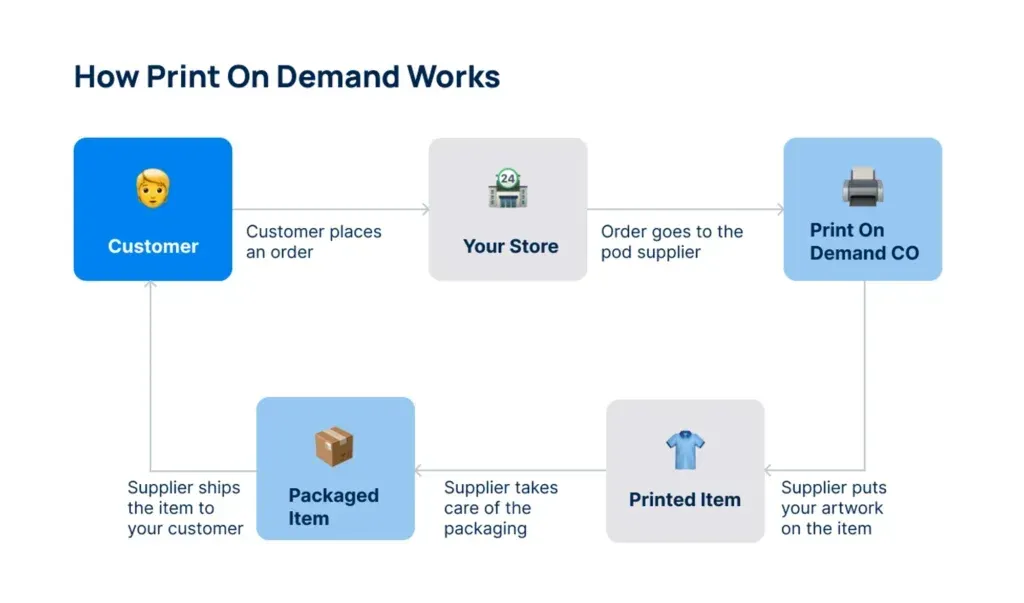
Print on Demand Automation is the catalyst that turns a good POD idea into a scalable, repeatable, and profitable business, empowering creators to launch faster, test ideas with lower risk, and protect brand quality at scale, globally. In today's market, growth relies on more than listing products; it hinges on POD automation tools and print on demand workflow automation that connect storefronts, printers, and shipping into a seamless operation, enabling scaling POD business without chaos and making proactive problem-solving possible. By automating the end-to-end journey—from order capture and validation to production instructions and proactive customer notifications—you reduce manual data entry, cut errors, shorten lead times, and deliver a consistently high-quality experience that builds trust, loyalty, and repeat business in competitive markets. This creates a repeatable framework you can scale as demand grows, and it pairs with POD integrations that keep product catalogs, pricing, and fulfillment status in sync across channels, printers, and markets, laying a solid foundation for expansion into new product lines and geographies. In short, this approach is a strategic investment that blends workflow optimization, data integrity, governance, and measured automation to unlock profitability while preserving quality control as you expand into new products, markets, and customer demographics.
From a broader perspective, the concept can be described as automated order fulfillment across a network of printers and platforms, where order routing, file validation, and production scheduling operate through connected systems rather than manual handoffs. In practical terms, this means orchestration software that links your storefronts (Shopify, Etsy, WooCommerce) to printing partners, tracks inventory, and triggers production instructions based on defined rules. The goal is to achieve seamless POD integrations, reliable data synchronization, and real-time visibility into each stage of the fulfillment lifecycle, so teams can focus on design and growth rather than repetitive tasks. In essence, modern on-demand manufacturing automation blends API-driven connectors with governance and monitoring to maintain quality while expanding reach.
1) Print on Demand Automation: A Catalyst for Scaling Your POD Business
Print on Demand Automation connects store platforms to printers, catalogs, and shipping services in a unified data flow, turning a good POD idea into a scalable, repeatable operation. By reducing manual data entry and automating error checks, you accelerate the path from checkout to production and protect against misreads that slow fulfillment.
Utilizing POD automation tools enables a standardized end-to-end process, enhances customer communications, and provides a repeatable framework you can grow as demand expands. With metrics like lead times, error rates, and capacity utilization in view, you can drive a scalable POD business with confidence and precision.
2) Choosing the Right POD automation tools to Streamline Your Store
A robust automation strategy layers several capabilities: order routing and routing rules, product and catalog updates, inventory and fulfillment dashboards, data synchronization with robust error handling, and analytics with real-time alerts. Each layer reduces manual touchpoints and strengthens overall process reliability.
When selecting tools, prioritize native integrations with your storefronts (Shopify, Etsy, WooCommerce, etc.) and with your chosen print providers. Look for data fidelity, security, and stable cross-system communication, so you can implement service levels that reflect your brand promises and scale without sacrificing control.
3) From Checkout to Delivery: Print on Demand Workflow Automation in Action
Workflow automation in the POD space turns a multi-step process into a smooth, rule-driven sequence. Typical automation includes order capture, validation and routing to the correct print partner, automated file checks, and production instructions transmitted with exact specs.
Automated workflows shorten cycle times, standardize outputs, and ease onboarding of new products or markets. This end-to-end approach—often described as print on demand workflow automation—gives you the clarity and reliability needed to scale while preserving quality and customer experience.
4) Automated Order Fulfillment: Speed, Accuracy, and Customer Trust in POD
Automated order fulfillment is one of the most tangible benefits of Print on Demand Automation. When orders flow automatically from checkout to production, you gain faster lead times, improved accuracy, and more predictable capacity planning.
To maximize results, establish clear SLAs with print partners, implement robust retry and escalation rules for failed prints, and build quality gates that catch most issues before production. Effective exception handling keeps problematic orders from stalling the entire pipeline while preserving throughput.
5) POD Integrations: Building a Connected, Scalable Stack for Your Store
POD integrations act as the connective tissue between storefronts, the automation platform, and printers. Prioritize compatibility with your storefronts, a broad printer network, and data fidelity to prevent losses during data transfer.
A well-integrated POD stack provides operational visibility through dashboards and alerts, enforces security and compliance, and supports launching new products or markets with low risk. It also enables ongoing improvements by measuring throughput, cost per unit, and customer satisfaction.
6) Patterns, Governance, and Practical Steps for Sustainable POD Automation
Adopt practical implementation patterns: start small with order routing and basic data validation, then layer in automated proofs, production instructions, and fulfillment notifications. This phased approach helps validate ROI while ensuring you can adjust SLAs before broad scaling.
Establish governance and modular architecture to support future growth. Document ownership, change control, and how each tool and integration propagates through the system. Plan for scale with modular, upgradeable components to avoid vendor lock-in while continuously improving efficiency and reliability.
Frequently Asked Questions
What is Print on Demand Automation and why should I adopt it for my POD business?
Print on Demand Automation automates the entire order lifecycle—from checkout to production to delivery—by linking your store platforms with print providers and shipping services. This reduces manual data entry, minimizes errors, and creates a repeatable, scalable framework for growth. Embracing automation also helps you maintain quality and deliver a reliable customer experience, while enabling easier expansion through POD integrations and partner networks.
What are essential POD automation tools to consider for a scalable operation?
Key tools include order routing, product and catalog updates, inventory and fulfillment dashboards, data synchronization, and analytics/alerts. The best approach combines these POD automation tools with strong storefront and printer integrations, then adds business rules that reflect your SLAs and brand promises.
How does print on demand workflow automation streamline the path from checkout to delivery?
Workflow automation turns the manual, multi-step process into a rule-driven sequence: capture orders, validate and route, prepare files and proofs, issue production instructions, perform QA and packaging, and handle shipping and notifications. This reduces cycle times, standardizes outputs, and minimizes touchpoints, making it easier to scale products and markets.
How can automated order fulfillment support scaling a POD business?
Automated order fulfillment speeds up production, increases data accuracy, and provides real-time visibility into capacity. This enables faster lead times, better forecasting, and improved customer experience as demand grows—supporting scaling without a linear increase in headcount.
Why are POD integrations critical when building a connected automation stack?
POD integrations are the connective tissue that ensures clean data flow between storefronts, automation platforms, and printers. Prioritize compatibility, a wide printer network, and data fidelity to avoid bottlenecks. They also improve security, visibility, and governance across your automation stack.
What common pitfalls should be avoided when implementing Print on Demand Automation?
Common pitfalls include over-automation without governance, brittle integrations that break with updates, and failing to design for exceptions. Mitigate these by assigning clear ownership, implementing robust error handling, and iterating with governance and documentation.
| Aspect | Key Points |
|---|---|
| What POD Automation is | Automates end-to-end order lifecycle to turn a good POD idea into a scalable, repeatable, and profitable business; connects storefronts with print providers, inventory, and shipping in a seamless data flow. |
| Why it matters | Moves beyond simply listing products; automation reduces manual work, errors, and delays while enabling growth. |
| Scope of automation | From design to production to delivery, including order capture, validation, routing, file prep, production instructions, QA, packaging, shipping, and customer notifications. |
| Key benefits | Time savings, fewer errors, improved customer satisfaction, and a repeatable framework for scaling with demand. |
| What this guide covers | Core concepts, practical tools, and implementation patterns to leverage automation without sacrificing quality or control. |
Summary
A concise HTML table above summarizes the core points of the Introduction focused on how Print on Demand Automation streamlines the end-to-end POD workflow, enables scalability, and supports a repeatable, higher-quality delivery model.